💡What You'll Learn
- What RWA tokenization actually means (without hype)
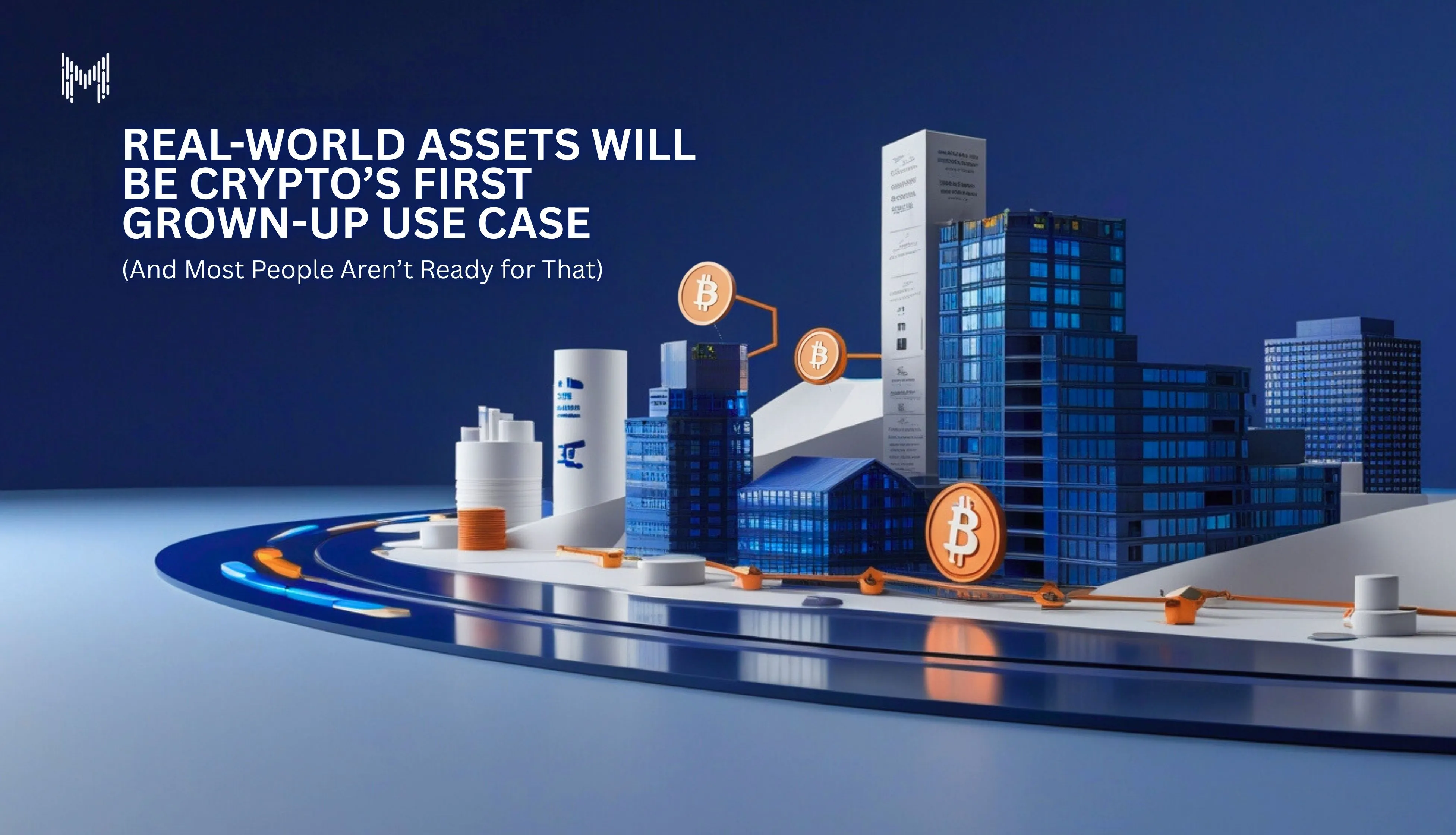
- Why RWAs are crypto’s first “grown-up” use case
- Why institutions care about RWAs more than Twitter does
- Why clarity and UX matter more than decentralization for RWAs
- How RWA platforms win by making ownership and risk obvious
Let’s get one thing out of the way.
Crypto isn’t going to change the world by replacing banks, governments, or the financial system overnight.
That story sounds exciting.
It gets clicks.
It fuels Twitter threads.
But it’s not how real money moves.
The real future of crypto looks far less dramatic and far more powerful.
It looks like Real-World Asset (RWA) tokenization.
Quiet. Regulated. Boring on the surface.
And massively impactful underneath.
Crypto Didn’t Fail Expectations Did
For years, crypto promised revolution.
Decentralize everything.
Remove intermediaries.
Replace institutions.
And while some breakthroughs happened, most of the world watched from the outside confused, skeptical, or completely uninterested.
Not because people hate innovation.
But because most crypto products were built for insiders, not real users.
Complex wallets.
Unclear ownership.
Hidden risks.
Interfaces that felt like puzzles.
People didn’t reject crypto because it lacked potential.
They rejected it because they didn’t trust what they didn’t understand.
And that’s exactly why RWAs matter.
What RWA Tokenization Actually Is (Without the Hype)
Real-World Asset tokenization means representing physical or traditional financial assets on the blockchain.
Think:
- Real estate
- Bonds
- Treasury bills
- Invoices
- Commodities
- Funds
- Royalties
Not memes.
Not vibes.
Not speculation-first assets.
RWAs connect blockchain to assets that already have value, legal frameworks, and real cash flow.
This is where crypto stops trying to replace the system and starts upgrading it.
And that shift changes everything.
Why Institutions Care (Even If Twitter Doesn’t)
Retail hype cycles come and go.
Institutions don’t move on hype.
They move on:
- Predictability
- Compliance
- Risk clarity
- Operational efficiency
RWA tokenization offers something crypto struggled with for years:
a reason for serious money to participate without breaking the rules.
Tokenized bonds settle faster.
Tokenized funds improve transparency.
Tokenized real estate increases liquidity.
No ideology required.
Just better infrastructure.
And once institutions step in, the market behaves very differently.
The Uncomfortable Truth: Decentralization Alone Isn’t Enough
This part makes people uncomfortable.
But it needs to be said.
Decentralization is not the same as trust.
If users don’t understand:
- What they own
- What rights they have
- What risks exist
- Who is responsible when things go wrong
Then “on-chain” doesn’t matter.
Most RWA projects won’t fail because blockchain doesn’t work.
They’ll fail because humans don’t trust what they’re clicking.
That’s not a technology problem.
That’s a design, UX, and clarity problem.
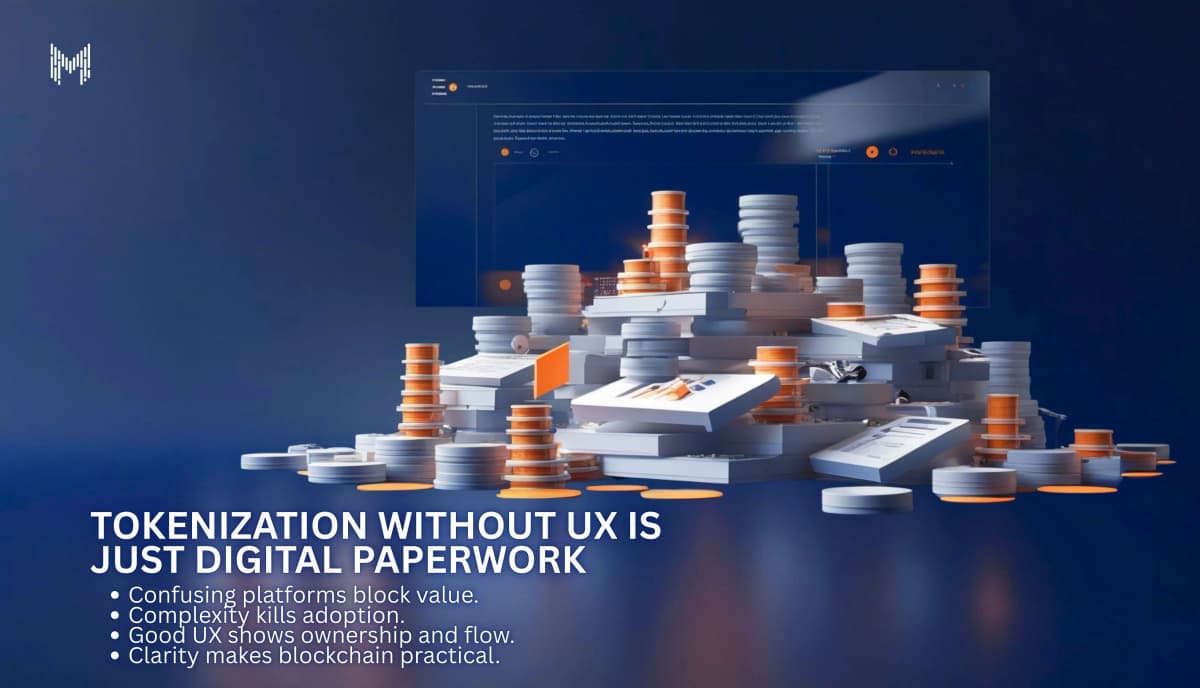
Tokenization Without UX Is Just Digital Paperwork
Here’s what too many RWA platforms get wrong:
They obsess over:
- Smart contracts
- Token standards
- Chain selection
- Yield mechanics
But they ignore:
- First-time user understanding
- Ownership clarity
- Plain-language explanations
- Cognitive load
If a user needs a legal degree and a crypto background to feel confident, the platform is already broken.
Power hidden behind confusion isn’t power.
It’s friction.
And friction kills adoption.
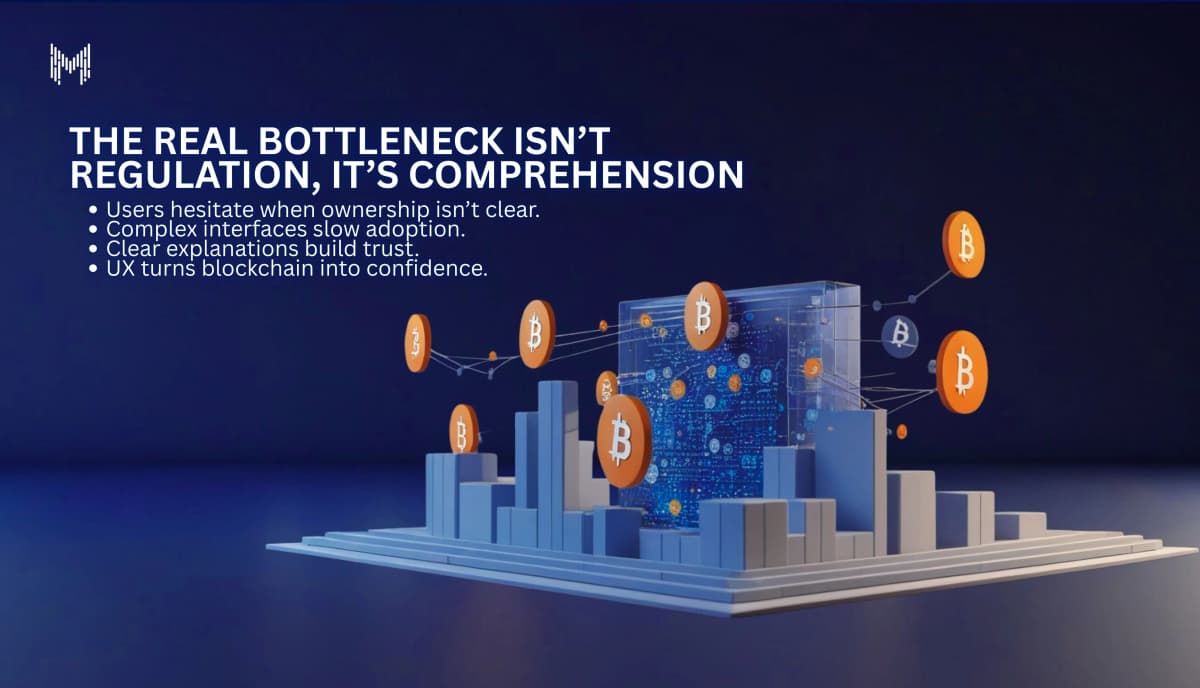
The Real Bottleneck Isn’t Regulation It’s Comprehension
Regulation gets blamed a lot.
Sometimes fairly.
Often lazily.
But in reality, regulation isn’t what slows RWA adoption the most.
Lack of clarity does.
Users hesitate when:
- Interfaces feel intimidating
- Information feels buried
- Risks feel vague
- Value feels abstract
They don’t need more features.
They need fewer questions.
The platforms that win will be the ones that:
- Explain ownership instantly
- Make rights visible
- Surface risks honestly
- Feel familiar, not experimental
Why RWA Tokenization Changes Crypto’s Reputation
RWAs force crypto to grow up.
No more “move fast and break things.”
No more hiding behind complexity.
No more shipping first and explaining later.
When real assets are involved, trust becomes non-negotiable.
That pressure is healthy.
It pushes the ecosystem toward:
- Better UX
- Stronger compliance
- Clearer communication
- More responsible design
And that’s exactly what crypto has been missing.
The Future of Crypto Isn’t Loud. It’s Legit.
RWAs won’t trend like meme coins.
They won’t dominate Twitter debates.
They won’t feel revolutionary on the surface.
But they will quietly:
- Move trillions on-chain
- Normalize blockchain infrastructure
- Bring credibility to the ecosystem
- Attract serious long-term capital
Crypto doesn’t need more hype. It needs products that make sense.
And RWAs are the first step in that direction.
Why We Build RWA Platforms Differently at Mkaits Technologies
At MKaits Technologies, we’ve seen a pattern repeat again and again.
Projects don’t fail because the blockchain choice was wrong.
They fail because users never felt confident using the product.
So we design RWA and tokenization platforms with one rule:
If a first-time user doesn’t understand what they’re interacting with, it’s not ready.
Our approach focuses on:
- Human-first UX for tokenized assets
- Clear ownership and value representation
- Reduced cognitive load
- Interfaces that feel intuitive, not “crypto-native”
- Systems that respect both users and regulation
Because tokenization should feel like progress not a gamble.
Crypto won’t win by being louder.
It will win by being clearer.
Real-World Asset tokenization isn’t the most exciting narrative
but it might be the most important one.
The real question isn’t whether RWAs are the future.
It’s whether the industry is ready to build them for real people, not just insiders.